Experiencing a sudden restart or shutdown on your iPhone can be unsettling, especially when it’s due to a kernel panic. This system-level error, similar to the Blue Screen of Death on Windows, indicates a critical failure that the iOS operating system cannot recover from on its own. However, before you hit the panic button, it’s important to understand that kernel panics are often resolvable. They can be a source of frustration for iPhone users, but understanding their causes and solutions can demystify these occurrences.
The key is to approach these issues with a blend of technical know-how and common sense. Regular maintenance, updates, and a cautious approach to third-party apps and accessories can go a long way in preventing kernel panics. As technology evolves, we can expect more robust solutions to these challenges, making our experience with iPhones smoother and more reliable.
Troubleshooting iPhone Kernel Panics
A kernel panic on your iPhone is like a sudden system crash. It’s frustrating, but you can often fix it. Let’s explore what it means and how to get your iPhone back on track.
What is an iOS Kernel Panic?
In simple terms, it’s when your iPhone’s operating system (iOS) encounters a critical error it can’t handle. This causes the phone to abruptly shut down and restart, often displaying a message about needing to connect to iTunes.
Common Causes
Troubleshooting Steps
When to Seek Professional Help
If the issue persists after trying these steps, it’s likely a hardware problem. Contact Apple Support or visit an authorized repair center for further assistance.
Remember, kernel panics can be alarming, but they’re often solvable. By following these steps and seeking professional help when needed, you can get your iPhone back to working order.
How To Interpret iOS Kernel Panic Codes
Here’s a table providing guidance on reading iOS iPhone Kernel Panic codes:
Additional Notes:
Key Takeaways:
What is a Kernel Panic?
Understanding the Basics
A kernel panic occurs when the core (kernel) of the iOS operating system encounters an unrecoverable error. This can result from various issues, ranging from hardware malfunctions to software bugs. Unlike regular app crashes, a kernel panic affects the entire system, leading to a sudden reboot or shutdown.
Common Causes of Kernel Panic
Identifying Kernel Panic on Your iPhone
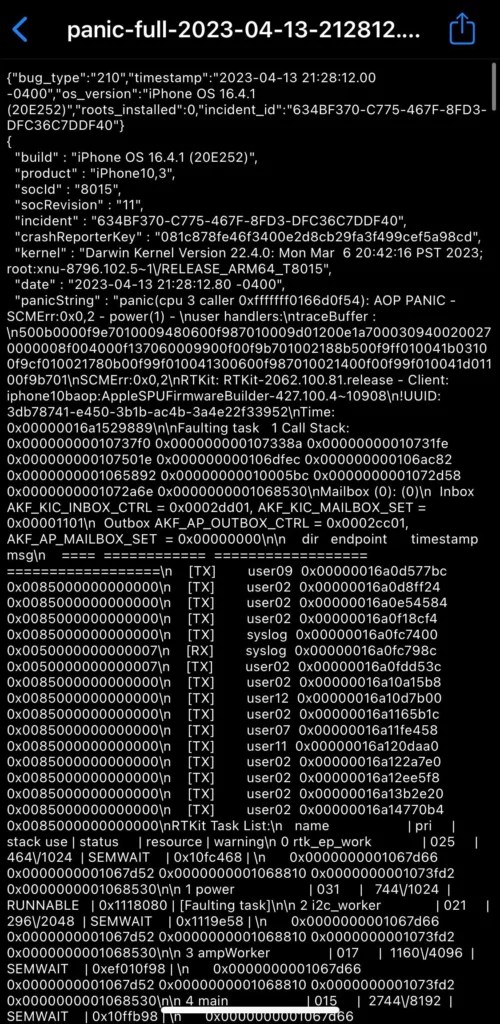
Finding and Interpreting Panic Logs
Your iPhone stores system logs that can provide clues about kernel panics. To access these logs:
Understanding Panic Log Terminologies
Panic logs contain technical details that can be overwhelming. Key terms to understand include:
Real-World User Experiences
Insights from Reddit Discussions
User discussions on platforms like Reddit provide real-world scenarios of kernel panics. For instance, a Reddit user onr/iosshared an experience with an iPhone 12 suddenly rebooting while browsing Safari. The panic log indicated an “AP watchdog expired” error, a common issue also seen in M1 Macs.
Common Scenarios Leading to Kernel Panic
External Links for Further Reading
Advanced Troubleshooting Techniques
Step-by-Step Guide to Resolve Kernel Panic
If kernel panics persist despite following these steps, it may indicate a deeper hardware issue. In such cases, seeking professional assistance from an Apple Authorized Service Provider is advisable.
Preventive Measures and Best Practices
Tips to Avoid Kernel Panic Occurrences
Regular Maintenance and Updates
Keeping your iPhone well-maintained and updated is crucial in preventing kernel panics. This includes:
The Future of Kernel Panic Management in iPhones
Technological Advancements and Their Impact
Apple continuously works on improving iOS stability and security. Future updates are expected to further minimize the occurrence of kernel panics, thanks to advancements in hardware and software technologies.
Apple’s Approach to Minimizing Kernel Panic Incidents
Apple’s software updates often address underlying causes of kernel panics. The company’s proactive approach in identifying and resolving these issues plays a significant role in enhancing the overall user experience.
Advanced Insights into iPhone Kernel Panic
In-Depth Analysis of Kernel Panic Causes
Understanding the root causes of kernel panics is crucial for effective resolution. Here’s a deeper look into some common triggers:
Technical Solutions to Kernel Panic
Proactive Steps to Avoid Kernel Panic
Regular Maintenance Tips
Technological Advancements in iOS
Apple’s continuous innovation in hardware and software is expected to reduce the frequency of kernel panics. Future iOS versions will likely incorporate more robust error-handling mechanisms. Apple’s proactive approach in releasing regular updates and patches demonstrates their commitment to providing a stable and secure user experience.
What is a kernel panic on iPhone?
A kernel panic on an iPhone is essentially a system crash. It’s a critical error that the iOS (the iPhone’s operating system) can’t handle, forcing the device to abruptly shut down and restart. Think of it as the iPhone’s equivalent of a “blue screen of death” on a Windows computer.
How serious is a kernel panic?
A kernel panic is a serious issue, indicating a significant problem with your iPhone’s software or hardware. While it doesn’t necessarily mean your phone is permanently damaged, it’s a sign that something needs attention.
Can you recover from kernel panic? Can kernel panic be fixed?
Yes, you can often recover from a kernel panic. In many cases, it’s a temporary software glitch that can be resolved with troubleshooting steps like force restarting your iPhone, updating your iOS or apps, or resetting certain settings. However, if the problem persists, it could indicate a hardware issue that requires professional repair.
How do I fix Apple kernel panic?
To fix an Apple kernel panic, start by trying a force restart. If that doesn’t work, update your iOS and apps to the latest versions. You can also try resetting all settings or restoring your iPhone to factory settings (make sure to back up your data first). If the issue continues, contact Apple Support or visit an authorized repair center.
What are common causes of kernel panics on iPhones?
Kernel panics can be caused by various factors, including:
How can I tell if my iPhone had a kernel panic?
If your iPhone suddenly restarts or shuts down without warning, it might have experienced a kernel panic. You can confirm this by checking the “Analytics Data” section in your iPhone’s settings. Look for logs with “panic” in the title, which provide details about the crash.
How can I prevent kernel panics on my iPhone?
To minimize the risk of kernel panics:
Will future iPhones have fewer kernel panic issues?
As technology advances and Apple continues to refine its software and hardware, it’s reasonable to expect that future iPhones will be less prone to kernel panics. However, it’s important to remember that any complex system can encounter unexpected errors, so occasional kernel panics might still occur even in the most advanced devices.
